
 Farid
Farid
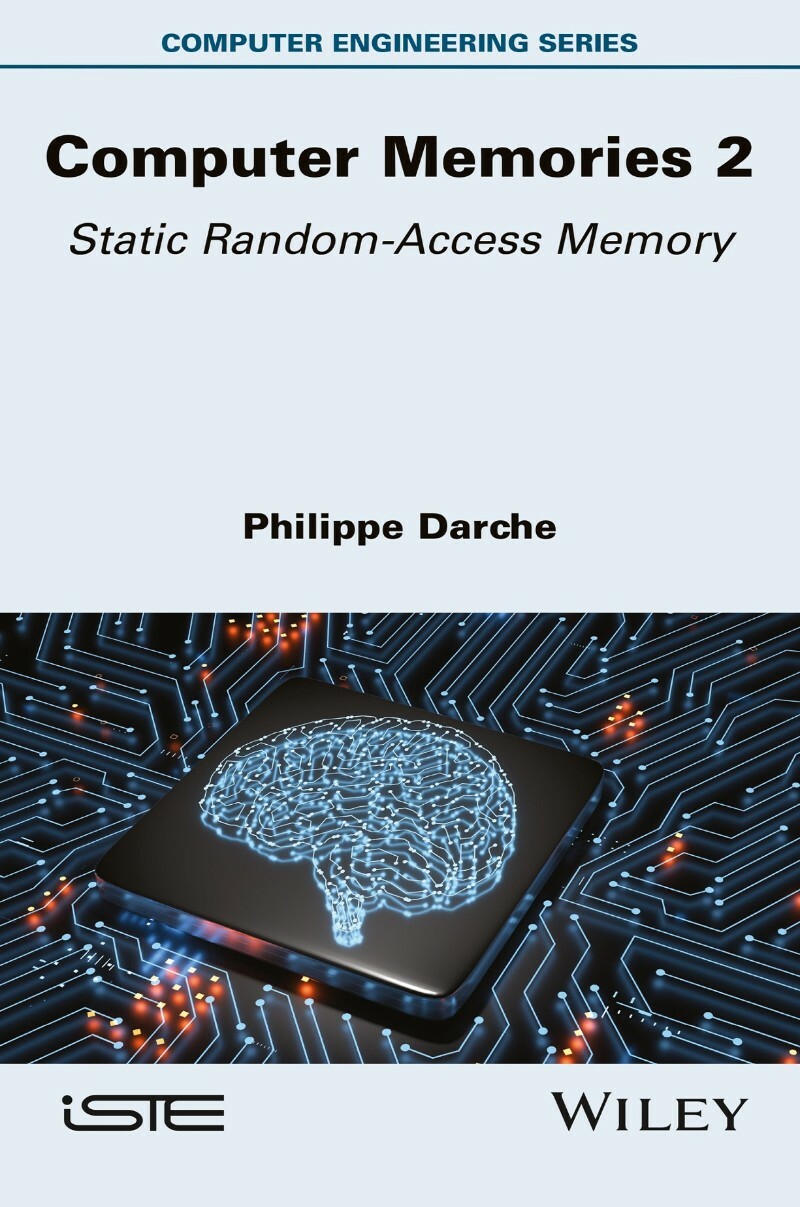
English | 2026 | ISBN: 1836690630 | 253 pages | True PDF | 12.33 MB
Catergory: Computer Technology, Nonfiction
Memory, the second function of a computer, has gradually become more complex in order to meet growing needs in terms of capacity, speed, security and energy efficiency. It takes the form of a component or system, such as a memory subassembly or a mass storage device.
For several decades, there has been a strong trend towards integrating memory directly into the processor under the term embedded memory, of which cache memory is a typical example. Understanding its internal mechanisms and interfacing is essential for mastering the operation of a computer and programming it efficiently.
Computer Memories 2 focuses on the static storage cell and its associated component, known as static random-access memory. The first part presents the main temporal characteristics of a generic random-access memory, as well as its electrical and mechanical properties, including aspects related to encapsulation. The second part focuses on the study of the first category of random-access semiconductor memory: asynchronous static memory, commonly referred to by the acronym SRAM (static random-access memory). The book details its temporal, electrical and mechanical characteristics, providing an in-depth understanding of its operation and technical specifications.
Contents of Download:
📌 Computer Memories 2.pdf (Philippe Darche;) (2026) (12.33 MB)
————————————*****————————————
⭐️ Computer Memories 2 Static Random Access Memory ISTE Invoiced ✅ (13.33 MB)
NitroFlare Link(s)
https://nitroflare.com/view/66326E947385C47/Computer.Memories.2.Static.Random.Access.Memory.ISTE.Invoiced.rar?referrer=1635666
RapidGator Link(s)
https://rapidgator.net/file/b04c7ff209940e5091f07114e34452df/Computer.Memories.2.Static.Random.Access.Memory.ISTE.Invoiced.rar



![American Rifleman April 2026 (Mark A. Keefe, IV [Editor])](https://i3.wp.com/images4.imagebam.com/6a/50/d2/ME1BCEUB_o.jpg?resize=800,1101&ssl=1 "American Rifleman April 2026 (Mark A. Keefe, IV [Editor])")


